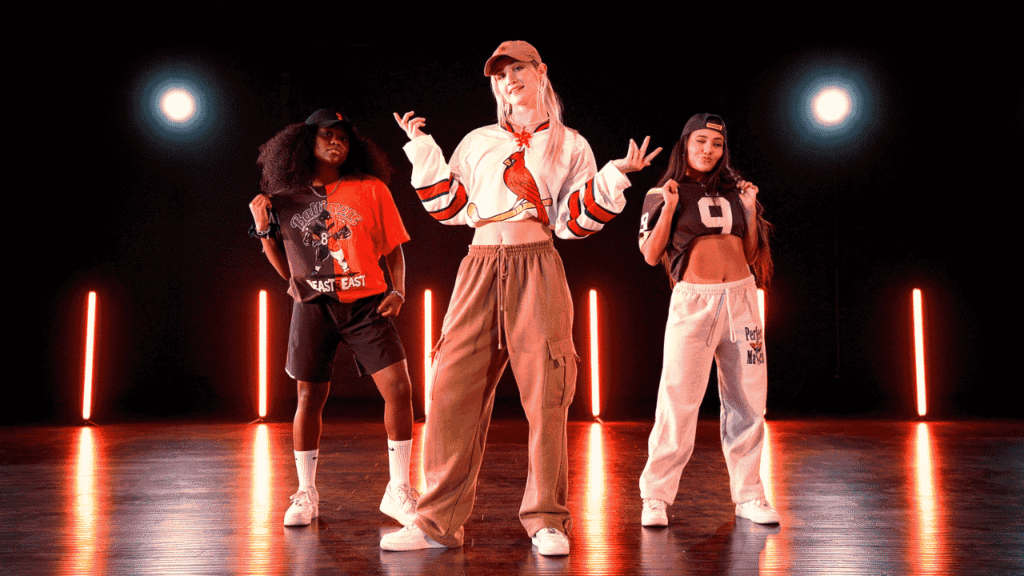
Understanding dance terminology is essential for Berkeley dancers of all levels, whether they are training in studios, performing on stage, or collaborating in community projects. Familiarity with key terms improves communication between instructors, peers, and choreographers, enhances technique, and ensures dancers can fully engage in both training and performance environments. This guide introduces essential vocabulary across styles and settings, helping dancers build a strong foundation for artistic growth.
Table of Contents
Overview of Essential Dance Terms
| Term / Concept | Meaning & Relevance |
|---|---|
| Alignment | Proper positioning of the body to maximize efficiency, prevent injury, and improve technique |
| Choreography | The art of designing and arranging dance movements into sequences or performances |
| Improvisation | Creating movement spontaneously without predetermined steps, fostering creativity and expression |
| Port de Bras | Arm movements and positions, primarily used in ballet but relevant across styles |
| Isolation | Moving one body part independently of others, essential in hip-hop, jazz, and contemporary dance |
| Plié / Relevé | Basic ballet movements involving bending (plié) or rising onto the balls of the feet (relevé) |
| Dynamics | Variations in movement quality, energy, and speed are used to convey emotion and intention |
| Musicality | The ability to interpret and respond to music rhythmically and expressively in dance |
| Ensemble Work | Coordinated group movement, emphasizing timing, spacing, and collaboration |
| Floorwork | Dance movements performed on or near the floor are common in contemporary and hip-hop styles |
| Improvisational Cues | Verbal or physical prompts guiding dancers during creative exercises or group choreography |
| Terminology by Style | Hip-hop (popping, locking, breaking), Latin (salsa, cha-cha, rumba), African (polyrhythms, isolations), Contemporary (contraction, release, off-balance) |
Foundational Ballet Terms
Ballet terminology forms the basis of many dance styles. Terms such as plié, relevé, tendu, arabesque, and port de bras are essential for proper technique and body alignment. Even contemporary and jazz dancers benefit from understanding ballet fundamentals, as they provide strength, posture, and precision. Ballet vocabulary is often incorporated into choreography and teaching methods at Berkeley studios and UC Berkeley dance classes.
Contemporary and Modern Dance Vocabulary
Contemporary dance in Berkeley emphasizes fluidity, expression, and individuality. Key terms include contraction, release, fall-and-recovery, off-balance, and floorwork, which guide dancers in executing movements with emotional intent and technical clarity. Understanding these concepts enhances a dancer’s ability to interpret choreography and collaborate effectively in ensemble pieces.
Hip-Hop and Street Dance Language
Hip-hop terminology, widely taught in Berkeley studios, includes popping, locking, breaking, waves, and isolations. These terms describe both movement styles and techniques unique to street dance culture. Knowledge of hip-hop vocabulary allows dancers to communicate efficiently during classes, battles, and collaborative projects, while also respecting the historical and cultural roots of the style.
Latin and World Dance Terms
Berkeley’s multicultural dance scene introduces students to salsa, cha-cha, rumba, Afro-Cuban, and West African dance styles. Terms such as basic steps, polyrhythms, clave, and isolations guide rhythm, coordination, and stylistic accuracy. Mastery of these terms helps dancers participate in cultural programming, festivals, and cross-disciplinary projects, enhancing both performance quality and community engagement.
Musicality, Dynamics, and Expression
Across all styles, terms like musicality, dynamics, phrasing, and expression are critical. These concepts teach dancers to interpret music, convey emotion, and execute movements with intention, ensuring that performances are both technically sound and artistically compelling. Berkeley instructors emphasize these principles to help dancers develop a well-rounded and expressive movement vocabulary.
Application in Berkeley Dance Classes
Familiarity with dance terminology improves class participation, rehearsal efficiency, and performance collaboration. Dancers can follow instructions quickly, respond to corrections, and execute choreography accurately. At community centers, youth programs, and university courses, instructors rely on consistent terminology to maintain clear communication, making it a vital component of Berkeley’s dance culture.
The Bottom Line
As Berkeley’s dance community continues to grow, understanding and using proper dance terminology remains essential. Mastery of vocabulary across ballet, contemporary, hip-hop, Latin, and world dance styles equips dancers to excel in training, collaborate effectively, and express themselves with confidence. For those pursuing professional careers or engaging in community projects, a strong command of terminology ensures that dancers can navigate Berkeley’s diverse and vibrant dance landscape with skill and creativity.